

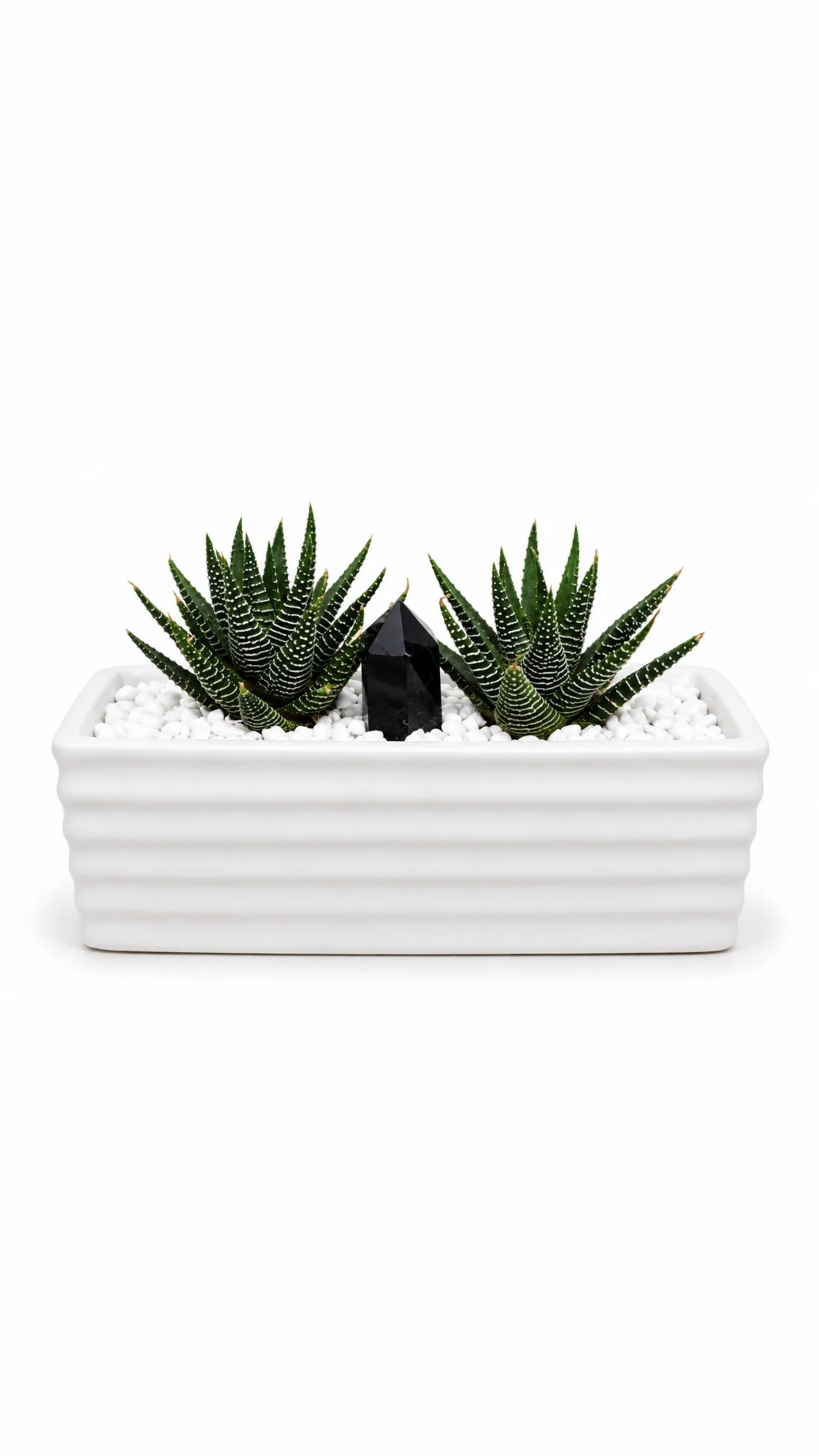
 Image 1 of 1
The Ritual
When the soil has dried completely, use approximately 0.5-1 oz of water total for your garden.
Begin by slowly pouring a portion of the water down the Black Obsidian crystal wand, allowing it to flow gently around the crystal and into the soil below. Distribute the remaining water onto the soil along each side of the planter, helping moisture reach the different root zones throughout the garden.
As the water moves from crystal to earth, take a moment to be present. Set an intention for what you want to protect, what you’re ready to release and the energy you want to ground within yourself and your surroundings.
Let the Black Obsidian anchor that intention while the living plants remind you that growth isn’t only about what we nurture—it can also be about creating space by releasing what no longer belongs.
This is more than watering a plant. It’s a small ritual of connection between you, living energy and energy from the earth.
Nurture your space. Set your intention. Influence your energy.
At GINA&AURA, we believe the energy you bring into your space matters—and so does the way it gets there.
Every cactus and succulent chosen for our Zen Gardens is individually handpicked. We look beyond appearance, selecting healthy, established plants and paying particular attention to the condition of their roots before they ever become part of an arrangement.
Each plant is carefully removed from its original growing medium so we can inspect and clean the roots before planting it in our signature handcrafted succulent & cactus soil blend. Made in-house and specifically curated for drought-tolerant plants, the blend provides the drainage and airflow their roots need while helping create a healthier transition from greenhouse conditions into your home.
Once planted, the garden is finished with natural stone and a carefully selected crystal.
But before that crystal becomes part of your Zen Garden, it goes through one final step: cleansing.
Each crystal is intentionally cleansed before being placed into the arrangement, clearing away the energy it may have carried through its journey and preparing it for its next space—yours.
The finished piece brings together two forms of nature: living energy from the plant and grounding energy from the earth. A small ecosystem created with intention, designed to bring a sense of stillness, connection and fresh energy wherever you place it.
HOW TO CARE FOR YOUR HAWORTHIA ZEN GARDEN
Haworthia may look intricate, but its care is beautifully uncomplicated. Naturally adapted to storing water within its thick foliage, it’s resilient, slow-growing and forgiving.
Give your garden good light, allow the soil to dry completely and resist the urge to overwater.
-
Haworthia prefers bright, indirect sunlight. Gentle morning sun is generally fine, but prolonged exposure to strong direct sunlight can stress or scorch the foliage.
Bright, filtered natural light is ideal.
-
Haworthia can adapt to medium indoor light, but brighter indirect light will encourage healthier, more compact growth and help maintain its beautiful colouring and markings.
A spot close to a bright window works beautifully.
-
Allow the soil to dry completely before watering again.
Once dry, use approximately 2 oz of water total. Slowly pour some of the water down the crystal and distribute the remainder onto the soil at each end of the planter.
Haworthias store moisture within their foliage and are much more forgiving of being left dry than being watered too frequently. Your garden may need water more or less often depending on the season, temperature and amount of light it receives.
When in doubt, wait. A little thirst is much easier to recover from than too much love.
-
Haworthia is perfectly comfortable in normal to low household humidity and does not require misting or additional humidity.
Good airflow and allowing the soil to dry thoroughly between waterings are far more important.
-
Haworthia is generally considered non-toxic to cats and dogs, making it an especially lovely option for homes shared with pets. As with any houseplant, we still recommend discouraging curious pets from chewing on the foliage.